


Airport Autonomous Driving Q&A: How UISEE’s AI Driver Power 21 Airports from Hong Kong to Urumqi and Singapore
When traveling through an airport, have you ever wondered how your luggage arrives precisely at the aircraft before departure—and then reappears at the baggage carousel within 30 minutes after landing?
Or when your flight parks at a remote stand, have you hoped to board a shuttle bus immediately, avoiding long waits and crowded transfers?
Today, these seamless experiences have become the norm at 21 airports worldwide, including Hong Kong, Urumqi, and Singapore. Behind the scenes, the key enabler is UISEE’s autonomous driving technology—its team of AI Drivers powering the daily operations of smart airports.
The smooth functioning of modern airports hides many lesser-known technological stories. Let’s take a closer look at how airport autonomous driving really works.
Q: With the full AI Driver team on duty, what autonomous vehicles are operating on the airport apron?
A: A full-scenario lineup with serious capability
UISEE has built a comprehensive AI Driver ecosystem for airports, covering four core operational scenarios: cargo and baggage transfer, personnel transportation, perimeter security, and ground support services.
From autonomous tractors handling baggage and cargo, to autonomous shuttle buses transporting passengers and staff; from patrol vehicles safeguarding perimeter security, to specialized vehicles guiding aircraft docking and cleaning the apron—these AI drivers work together seamlessly. Their collaboration is reshaping behind-the-scenes airport operations, making every link more efficient, safer, and more reliable.
.jpeg)
Q: Why are airport autonomous vehicles painted yellow and equipped with a "yellow cap" on the roof?
A: Designed for both safety and performance
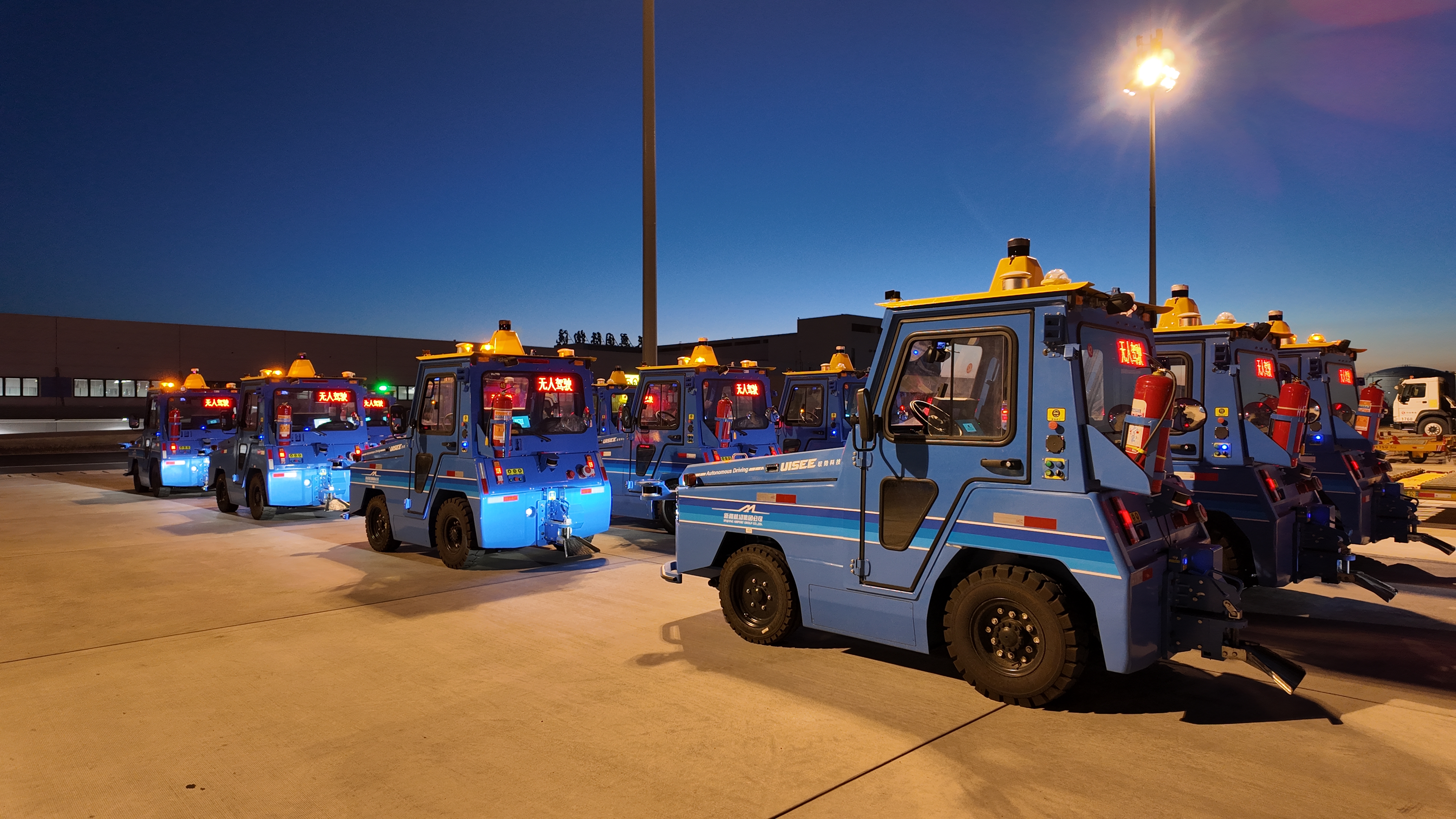
The yellow color is not a design whim—it is a long-established safety convention in aviation operations. Yellow offers maximum visibility under varying light and weather conditions, ensuring vehicles can be quickly identified on the apron.
The roof-mounted "yellow cap" is a high-performance LiDAR sensor. Far from being decorative, it enables earlier, longer-range, and more precise detection of surrounding aircraft, vehicles, and equipment—adding an extra layer of safety to autonomous operations.
Q: Do autonomous vehicles at airports have their own “license plates”?
A: Certified to operate, built for trust
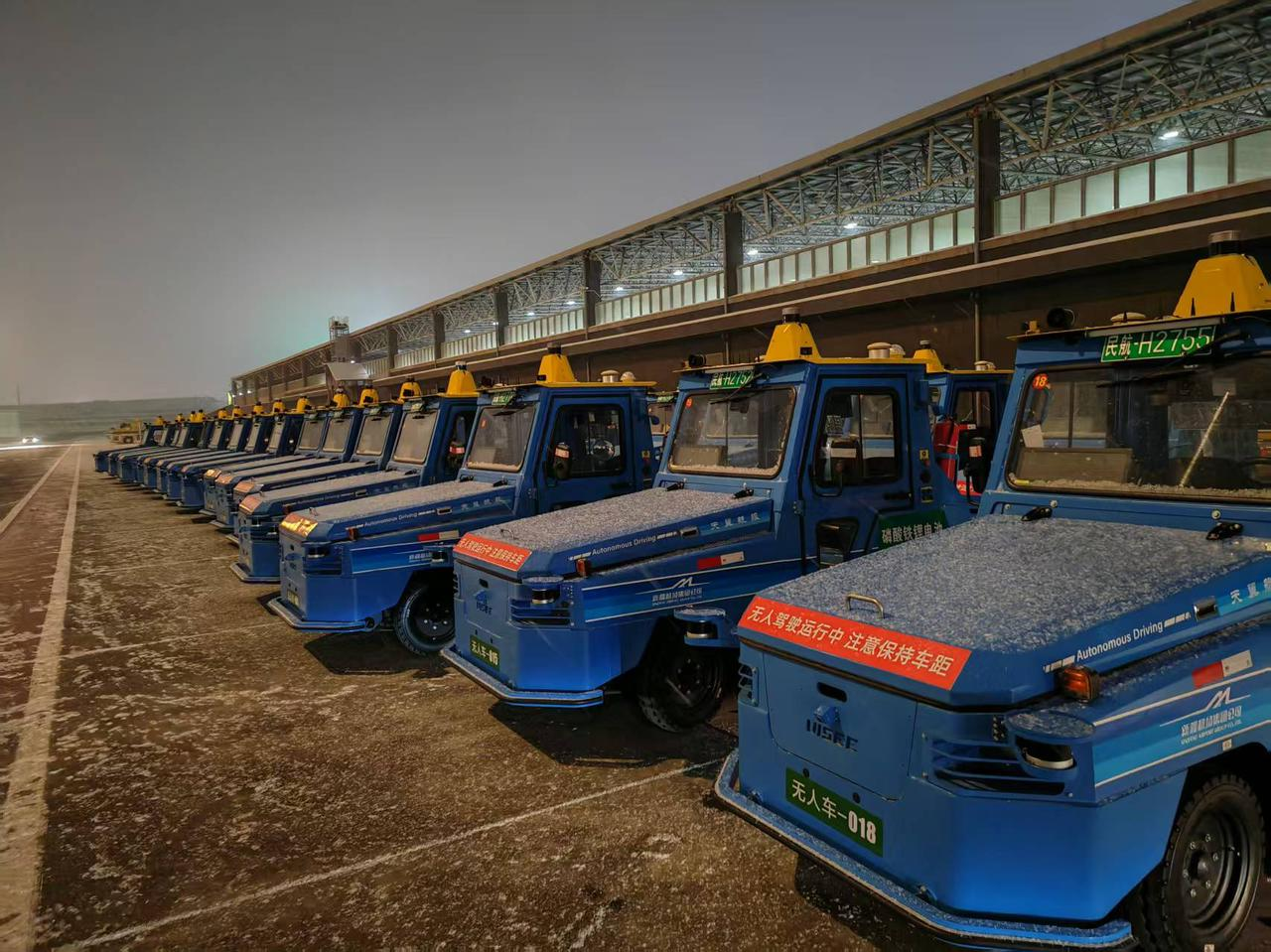
Airport autonomous vehicles do not carry standard blue or yellow road license plates—but that doesn’t mean they are unregistered. Instead, they must obtain special vehicle identification plates and operating permits for civil aviation movement areas.
Only vehicles that meet strict technical and safety standards are authorized to operate on the apron. This “certified-to-operate” status ensures compliance, safety, and enables unified scheduling and management by airport authorities.
Q: What happens when an autonomous vehicle encounters a taxiing aircraft on the apron?
A: Rules first, always yielding to aircraft
On the apron, aircraft always have the highest priority. Autonomous vehicles are no exception.
Before entering operation, UISEE’s AI Drivers are trained to strictly follow apron rules. Using long-range perception systems, they detect aircraft positions, speed, and movement direction hundreds of meters in advance, continuously tracking aircraft dynamics and proactively adjusting routes to yield well ahead of time. Discipline and rule compliance are what enable truly safe autonomy.
.jpeg)
Q: Heavy rain, snowstorms, dense fog—do autonomous vehicles stop working?
A: All-weather capability, fully activated
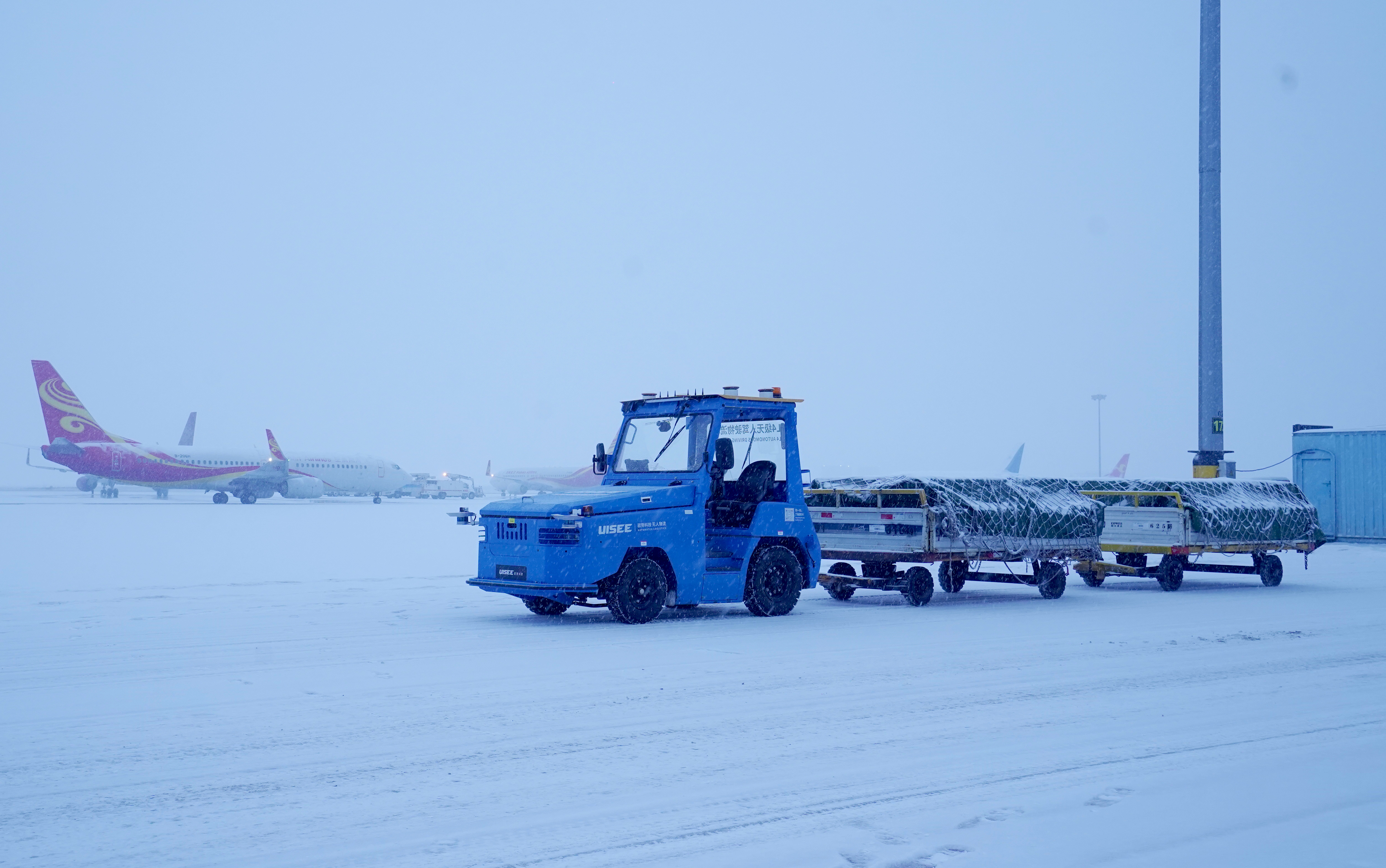
From –25°C winters in Urumqi, to “Black Rainstorm” conditions in Hong Kong, to sandstorms in the deserts of Qatar—extreme weather is a daily reality for UISEE’s AI Drivers.
Trained on massive volumes of real-world data from harsh environments and supported by vehicle–cloud collaborative algorithms, UISEE’s autonomous systems can accurately perceive and respond to complex conditions. No matter how the environment changes, they are built to keep airport operations running—without “going offline.”
Q: How do large autonomous fleets coordinate on such a busy apron?
A: A cloud-based command system orchestrates everything
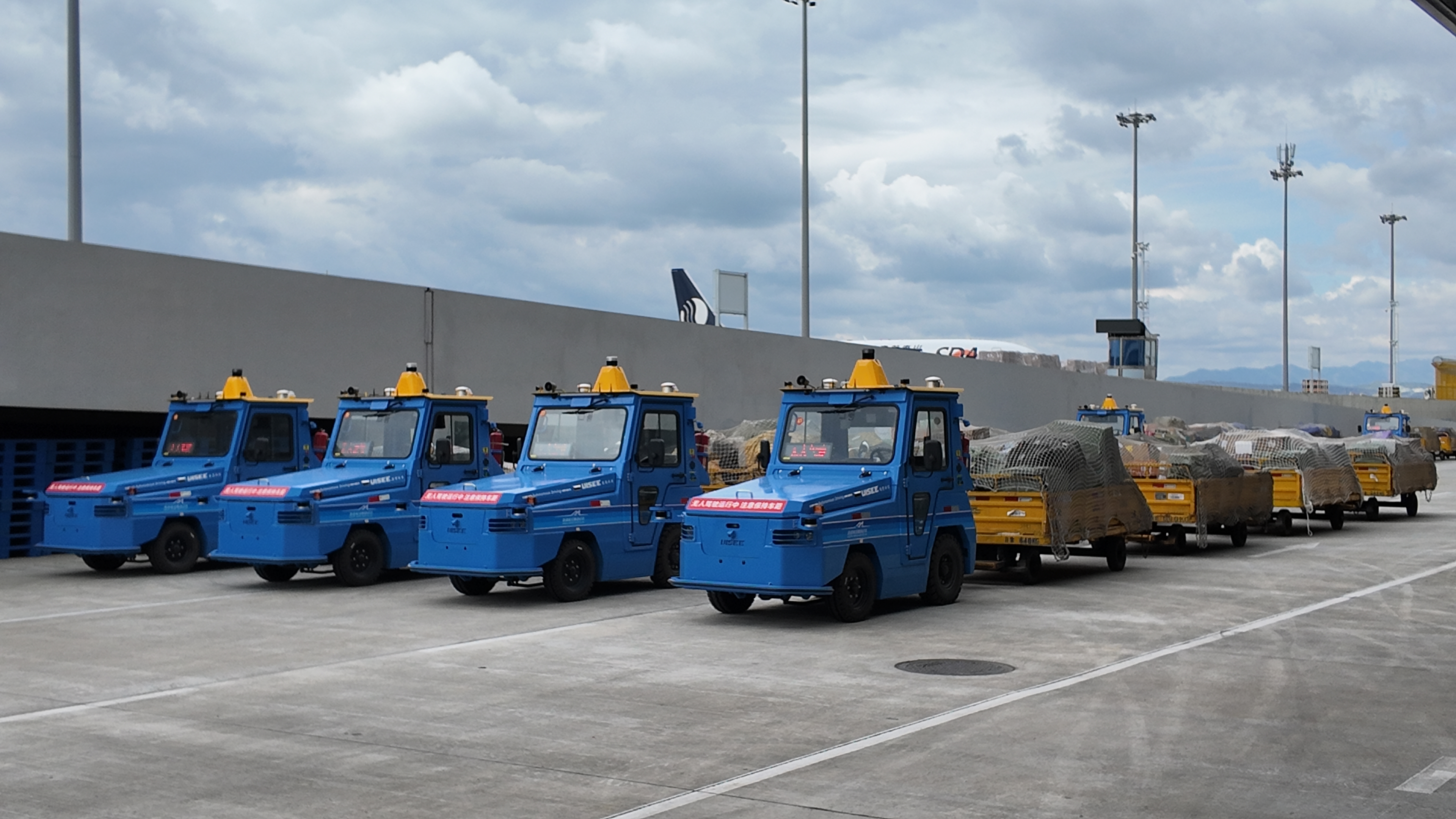
Behind the scenes, a cloud-based fleet management platform acts as the “chief commander.” It enables all AI Drivers to communicate in real time, coordinate tasks, and dynamically prioritize missions—such as giving precedence to baggage transfers for flights nearing departure.
Using big data analytics, the system monitors and predicts flight schedules and logistics demand, pre-planning routes and assignments for each vehicle to maximize efficiency and ensure no operational capacity is wasted.
As you move briskly through an airport, you may never notice these AI Drivers at work. Yet it is their quiet, precise coordination that safeguards every departure and arrival—adding reassurance, efficiency, and comfort to each journey.
Follow UISEE on social media: